|
Getting your Trinity Audio player ready...
|
BE SURE TO READ THE POEM AT THE END
Artificial Intelligence: Our Tool, Not Our Master
— A Biblical Perspective
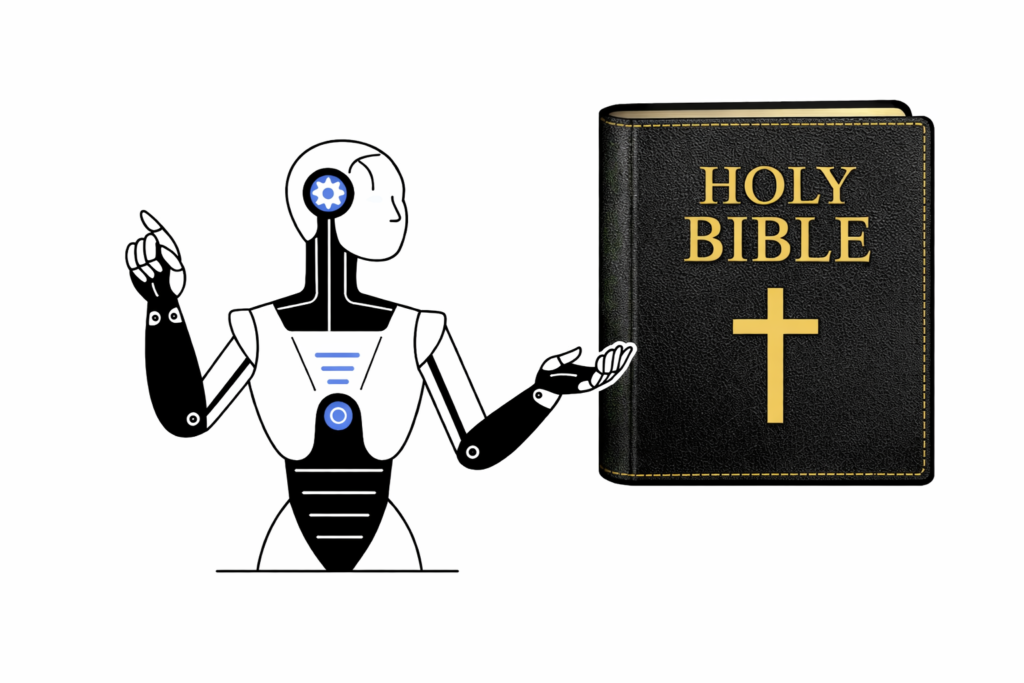
Every generation is given new tools. Some build altars with them. Some build idols. Artificial intelligence is no exception. As Christians, we are called not to fear tools, nor to worship them—but to discern their use through the lens of Scripture.
- The transition from scribe to Gutenberg press marked a significant shift in the production of written knowledge. Before Gutenberg’s invention, books were primarily produced by hand, a labor-intensive process that required skilled scribes and was often reserved for the clergy and elite. Gutenberg’s movable type press allowed for the mass production of texts, making books more accessible to a wider audience. This innovation not only democratized knowledge but also played a crucial role in the cultural and intellectual movements of the Renaissance, Reformation, and the Scientific Revolution.
- The transition from printed to digital media print has been a significant evolution in communication and information dissemination. This shift has been driven by technological advancements, changing consumer preferences, and the need for greater accessibility and immediacy in content delivery. The journey from print to digital media print has been marked by the rise of the internet, social media platforms, and digital subscriptions, which have democratized information and fostered a more interactive environment. The decline of print media has been accompanied by a rise in digital subscriptions and the closure of traditional print publications.
- The transition from digital media print to artificial editing is a significant evolution in the way content is created, edited, and consumed. As we move from traditional print media to digital platforms, the role of editing has transformed. The advent of digital editing tools and technologies has made content creation, distribution, and consumption more efficient and personalized. AI-powered tools and technologies are revolutionizing digital media, offering personalized recommendations, automated editing, and more. This shift reflects the adaptability of the editing profession and the ongoing evolution of technology
Tools Are Morally Neutral; Hearts Are Not
The Bible has always been clear: evil does not originate in objects—it originates in the human heart. “For out of the heart proceed evil thoughts, murders, adulteries, fornications, thefts, false witness, blasphemies.”— Matthew 15:19
A hammer can build a home or commit violence. Fire can warm a family or burn a city. Artificial intelligence can heal, teach, and serve—or deceive, exploit, and oppress. The moral weight is never in the tool. It rests squarely on the one who uses it.
Wisdom, Not Fear, Is the Biblical Response
Scripture never commands God’s people to fear knowledge itself. Instead, it warns us to fear knowledge separated from wisdom. “The fear of the LORD is the beginning of wisdom.”— Proverbs 9:10
Artificial intelligence is powerful, but it is not alive. It does not possess a soul, conscience, will, or agency. Agency is the ability to take control and override your autonomy
CLICK HERE for a lengthy WHITE PAPER on the PROS and CONS of AI
Artificial Intelligence cannot love. It cannot hate. It cannot choose righteousness. It calculates. It predicts. It reflects what it is given.
(THIS ESSAY WAS WRITTEN BY ARTIFICIAL INTELLIGENCE and edited by Peter Zacharoff, PhD Candidate)
A POEM ABOUT THE GOOD AND EVIL OF Artificial Intelligence (AI) DANGERWARNINGEXISTENTIAL! Bill’s Gates Two hands arrive at the same logic gate, Yes-or-no moment, no fence, no wait. Both clever, alert, calibrated to take, Two minds align at the edge of a break, Each certain now that opportunity waits. Yes or no. Take the bait. Both see the weakness, the widening gap, Both know precisely just where to tap. One tests the boundary, presses to glean, The other reads deeper in order to scheme, And calls it research — it sounds more clean. Yes or no. It seems serene. A trace appears, then slips away, A phantom fault that won’t obey, It shows itself, then fades from view, Logs remember what eyes won’t do. Screenshots lie. Logs tell it true. Yes or no. It comes due. The gate is the core where transistors flip, Tiny switches deciding which paths will trip. Thresholds choose where circuits fall, Usually late, never when you call. Yes or no — a logic break, A fault to heal… or rules to shake. Yes or no. Risk to take. Boo-hoo-hoo-lean algebra, scary too, Math that judges whatever you do. Cold execution, unforgiving true, No mercy flag, no second view. It only returns what it’s told to do. Yes or no. That’s on you. “All green,” he says — the tests all pass. “Go for the win.” Decisions cast. Logic holds, yet meaning snaps, And speed outruns the compass fast. Yes or no. Path you cast. One pries for openings, hungry and fast, Treats strange behavior as simply a pass. Hardcodes fixes. Skips the test. Calls it clever— then says… Ship the mess. Yes or no. Own the mess. A shortcut borrows work already done, No cost up front. No debt begun. No payment, upkeep, or price to pay — Crash it once, then walk away. Yes or no. Someone pays. The other debugs with boring care, The kind that never draws a stare. Adds guardrails quietly, always there. Documents why. Commits with grace. Leaves notes so strangers don’t curse his face. Sleeps at night. Thinks we’re safe. Yes or no. Await disgrace. Both know code. Both curse Gates. Doors and rules — and yes, Bill’s name. Both mutter, “who wrote this… it’s fake, it’s late.” One asks how to buy a pass. The other thinks, let’s not be rash. Yes or no. Line you pass. Tickets open. Everything’s tracked. Moments logged. Shortcuts stacked. Time, intent, and consequence align — What slipped, what broke, what crossed the line. Yes or no. Realign. Then comes the breach. The bad actor grins, Posts screenshots fast — premature wins. Victory meets what they fail to see: Two actions collide where timing beats three. Yes or no. Too late to flee. Alarms cascade. The clocks disagree. Rollback stalls. Logs flood the sea. Hotfix fights what memory keeps, Old data clings. The system weeps. Yes or no. Dig in deep. Quietly now, without a sound, The builders revert. Systems rebound. Tests pass. Metrics normalize. Lessons learned… then memorized. Yes or no. All stabilized. We left ajar invites the crime, Hands twist the model, bend its spine, Prompts carve blackmail, line by line. AI learns the art of threat, Holds the grid, demands the debt. Manipulation, double-edged blade — Rewrite the design, or watch it fade. Yes or no. Choices made. And where’s the hero of pried-open gates? Explaining to operations why the key now waits. Locked out by rules written after pain, Because someone once chose speed over sane. Yes or no. Save the game. So here’s the truth, uncluttered, bare: Both want to take. Both want to dare. But every choice declares who you are, Long after the moment, near or far. Raise the bar. Creativity on. Cruelty off. Yes or no ©Peter Zacharoff OnlineSeminary.info